

Key Takeaways
Start here
Why container gardening works for small spaces
Next
Choosing containers without overspending
Foundation skills
Soil, drainage, and the basics that matter most
Put it to use
What to grow: herbs, vegetables, and flowers
Keep it going
Watering, feeding, and keeping plants healthy
Why container gardening works for small spaces
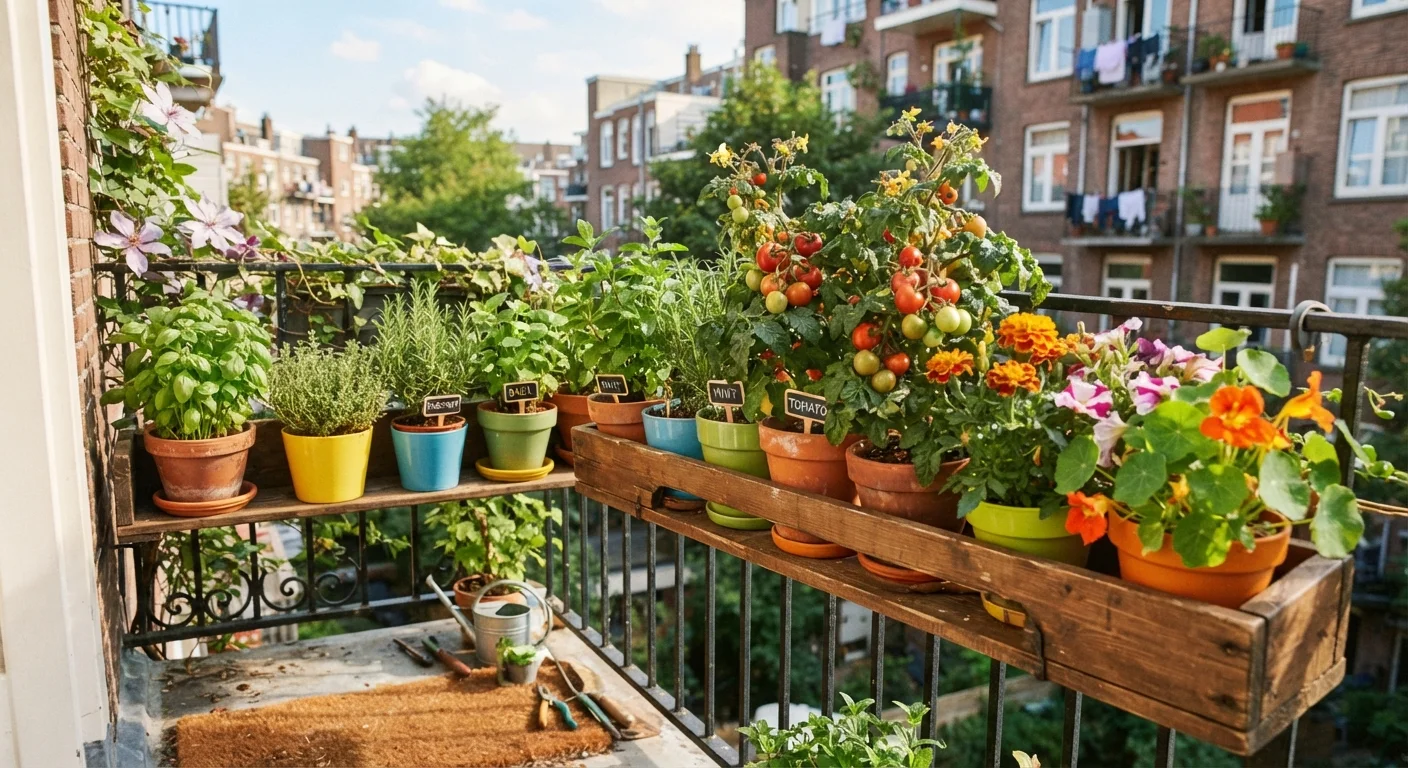
Container gardening moves the growing space to wherever you have room: a balcony, a patio slab, a fire escape landing (where local codes permit), or even a sunny windowsill. Because the plants live in portable vessels, you control the soil quality, sun exposure, and drainage independently of whatever ground conditions exist below.
For renters and apartment dwellers, containers are also non-permanent. You can take them with you when you move, which makes the investment worthwhile in a way that raised beds in rented backyards often are not. A small collection of well-chosen pots can supply a household with fresh herbs year-round and meaningful quantities of salad greens through the growing season.
Container gardens also respond quickly to changes. If a spot turns out to be too shady or too exposed to wind, you move the pot. That flexibility reduces the cost of early mistakes, which is useful when you are learning what works for your specific space.
Choosing containers without overspending
Purpose-built ceramic and terracotta pots look attractive but carry a price that adds up fast when you need several. Plenty of common household items function just as well: five-gallon buckets, wooden crates lined with landscape fabric, colanders, grow bags made from fabric, and large food-safe plastic tubs all work provided you add drainage holes at the base.
Drilling a half-inch hole in the bottom of a plastic or wooden container takes under a minute with a standard drill bit. For metal containers, a hammer and nail create a serviceable hole, though rust can be an issue over time. The rule is simple: if water cannot escape, roots will rot.
When sizing containers, match the pot to the plant's root system. Shallow-rooted herbs like basil, parsley, and chives grow well in pots six to eight inches deep. Tomatoes, peppers, and eggplants need at least ten to twelve inches of depth and a wide enough diameter to hold sufficient soil volume.
Container gardens can also improve the look of your outdoor space. For more ideas on budget-friendly outdoor upgrades, see the low-cost curb appeal guide for approaches that work well alongside container plantings.
Soil, drainage, and the basics that matter most
Potting mix
A soilless growing medium made from materials like peat, perlite, and compost. It is lighter than garden soil and designed to drain well in containers.
Drainage hole
An opening at the base of a container that lets excess water escape. Without one, roots sit in standing water and rot.
Perlite
Small white volcanic particles added to potting mix to improve aeration and prevent the mix from compacting over time.
Liquid fertilizer
A water-soluble plant nutrient concentrate that you dilute and apply during watering. It feeds container plants quickly because potting mix holds few natural nutrients.
Compact variety
A plant bred to stay smaller than its standard counterpart. Compact varieties are better suited to pots because they need less root space and grow to a manageable height.
Self-watering container
A planter with a built-in water reservoir at the base. A wick or wicking medium draws moisture up to the roots as needed, reducing how often you must water.
Garden soil from the ground is not suitable for containers. It compacts in pots, cutting off oxygen to roots, and often drains poorly. Potting mix is the correct choice: it stays loose, drains well, and is light enough for weight-sensitive balconies.
For most vegetables and herbs, a standard all-purpose potting mix works without modification. If you are growing in fabric grow bags or any container that dries out fast, mix in about 20 percent by volume of perlite to slow moisture loss without affecting drainage. For succulents or Mediterranean herbs like thyme and rosemary, a cactus-specific potting mix or a sandy blend drains fast enough to prevent root rot.
Place a small piece of window screen or a coffee filter over the drainage hole before filling the container. This keeps the potting mix from washing out with each watering while still letting water pass freely.
Weight limits on balconies matter
Wet soil is heavy. A 15-gallon container filled with saturated potting mix can weigh 50 pounds or more. Older buildings and upper-floor balconies often have strict weight limits set by building codes. Before filling a balcony with large pots, check your lease, ask your building manager, and distribute weight along load-bearing edges rather than in the center of the floor.
What to grow: herbs, vegetables, and flowers
The most productive container plants for beginners are those that produce continuously rather than just once. Herbs lead this category: basil, mint, chives, parsley, and cilantro grow quickly, tolerate being cut back regularly, and cost far less to grow than to buy at a grocery store over a season. Keep mint in its own container because it spreads aggressively and will crowd out neighboring plants.
Among vegetables, compact tomato varieties labeled as patio, dwarf, or bush types produce well in five-gallon or larger containers. Lettuce, spinach, arugula, and radishes all do well in shallower pots and can be harvested as cut-and-come-again crops, where you remove outer leaves and the plant continues growing. Peppers and green onions are also reliable container performers.
Flowers serve a practical purpose beyond appearance: marigolds and nasturtiums attract pollinators, which improves vegetable yields on balconies that might otherwise see little bee activity. Nasturtium flowers and leaves are also edible, adding color to salads at no extra cost.
Group pots together to slow moisture loss
Placing containers close together on a balcony creates a microclimate with slightly higher humidity around the leaves. This slows evaporation from both the foliage and the soil surface. On hot, exposed balconies, grouping can reduce how often you need to water by a noticeable margin.
Watering, feeding, and keeping plants healthy
Container plants dry out faster than ground-planted ones because the soil volume is small and the pot sides expose the mix to heat and wind. During warm months, most containers need watering daily or every other day. The reliable test: push a finger an inch into the soil. If it feels dry at that depth, water thoroughly until it drains from the bottom holes.
Potting mix contains limited nutrients, and frequent watering flushes out what little is present. Starting about two weeks after planting, apply a diluted liquid fertilizer every one to two weeks through the growing season. General-purpose balanced formulas work for most vegetables and herbs. For flowering and fruiting plants like tomatoes and peppers, a fertilizer with higher phosphorus and potassium content supports bloom and fruit development.
Watch for yellowing leaves (often a sign of nutrient deficiency or overwatering), leggy stretched stems (a sign of insufficient light), and dry crispy leaf edges (heat or drought stress). Most container problems have a straightforward fix once you identify the cause.
Renters: check before you drill
Hanging planters and wall-mounted trellises are popular for small balconies, but many rental agreements prohibit drilling into walls, railings, or ceilings. Freestanding railing hooks and tension-rod shelf systems are widely available and leave no permanent marks. Always confirm with your landlord before making any fixture.