

Key Takeaways
Our Verdict
Pressure-treated lumber is the more economical choice for structural outdoor work, including deck framing, fence posts, and any application involving ground contact. Cedar is worth the higher material cost for raised garden beds, furniture, and visible surfaces where appearance, natural scent, and chemical-free growing conditions matter. Neither wood suits every situation.
| Best for | Recommended |
|---|---|
| Budget-conscious deck builders and fence installers | Pressure-treated lumber |
| Families growing edibles in raised garden beds | Cedar |
| Projects requiring ground-contact or below-grade installation | Pressure-treated lumber |
| Visible outdoor furniture and decorative structures | Cedar |
What makes these two woods different
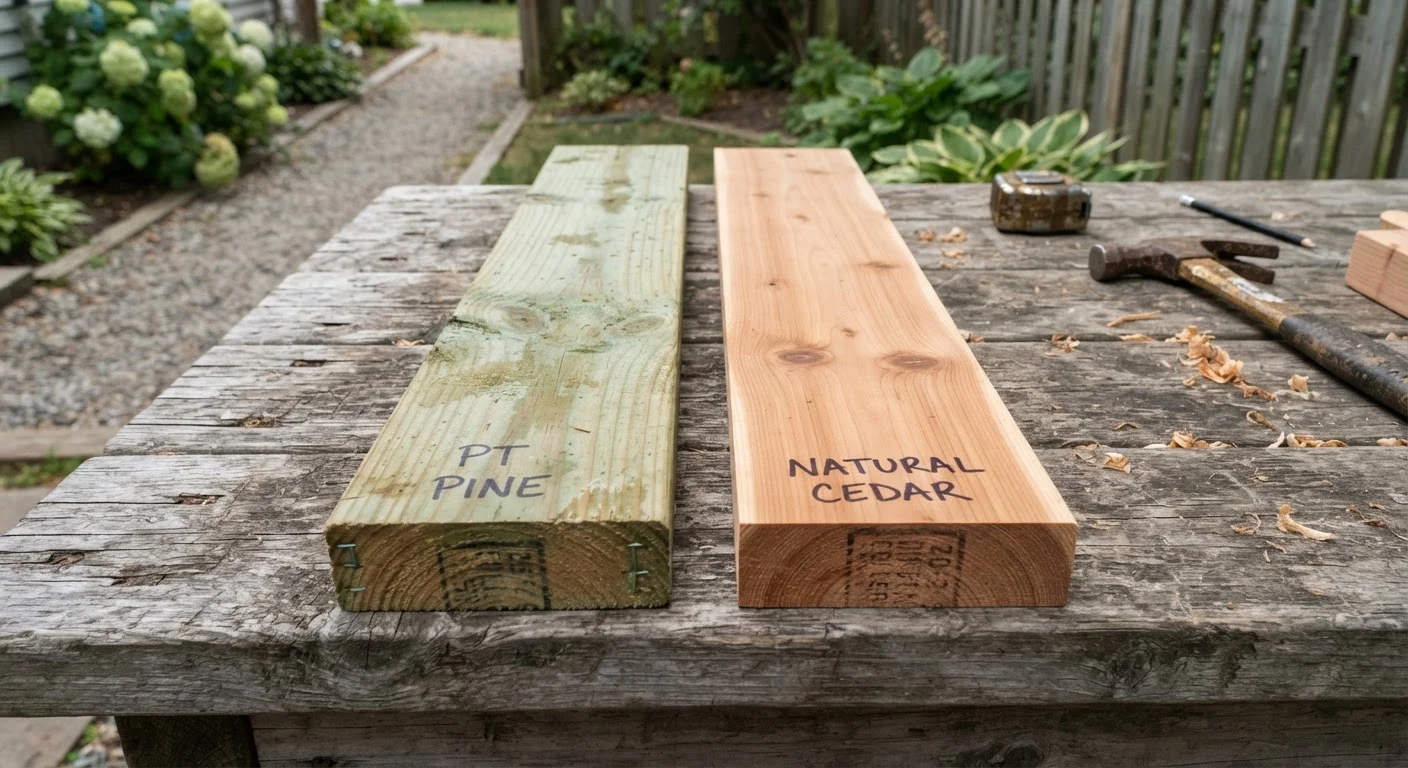
Pressure-treated lumber is standard softwood, typically southern yellow pine, infused under pressure with preservative compounds. Modern formulations use copper-based preservatives such as alkaline copper quaternary (ACQ) or copper azole (CA), which replaced the arsenic-containing chromated copper arsenate (CCA) that was phased out for residential use in the early 2000s. The treatment protects against rot, fungi, and insects.
Cedar is a naturally rot-resistant species. Its heartwood contains oils that deter moisture absorption and discourage insect damage without any added chemicals. Western red cedar is the variety most widely available at U.S. lumber yards for outdoor work. It is lighter than pressure-treated pine and easier to cut, but it costs more per board foot and is not uniformly available in all regions.
| Pressure-treated lumber | Cedar | |
|---|---|---|
| Typical material cost | Lower (roughly half the price) | Higher per board foot |
| Ground-contact durability | 30+ years with proper rating | 5 to 15 years |
| Above-grade durability | 15 to 25 years with maintenance | 15 to 25 years with maintenance |
| Chemical additives | Copper-based preservatives | None; naturally rot-resistant |
| Raised bed safety | Use food-safe liner or avoid | Generally accepted as safe |
| Weight | Heavier, higher moisture content | Lighter, easier to handle |
| Regional availability | Widely available nationwide | Varies by region |
| Fastener requirement | Must use treated-rated hardware | Stainless or hot-dipped preferred |
Cost and availability
Pressure-treated lumber is widely stocked at home centers and lumber yards across the country, often at roughly half the price per linear foot compared to cedar of the same dimension. For a 200-square-foot deck, that gap adds up quickly. Cedar availability varies by region: it tends to be more affordable and easier to find in the Pacific Northwest, while supplies can be tighter and prices higher in the Southeast and Midwest.
Long-term costs look somewhat different. Pressure-treated wood typically needs sealing or staining within a year or two of installation, because the treatment process leaves the wood with elevated moisture content that causes cupping and cracking as it dries. Cedar weathers to a silver-gray naturally and can be left unfinished, though sealing it extends the color life and slows surface checking. Over a 15-year period, maintenance material costs tend to be comparable between the two.
Durability and best applications
For ground-contact work, pressure-treated lumber rated for ground contact (labeled UC4A or UC4B) is the practical standard. Fence posts, deck footings, and retaining wall timbers buried in soil will outlast cedar in the same conditions. Cedar in direct ground contact typically lasts 5 to 15 years depending on soil moisture; pressure-treated pine rated for ground contact can last 30 years or more under the same conditions.
Above ground, the gap narrows. Both woods perform well for deck boards, rails, and fence boards when properly maintained. Cedar holds fasteners cleanly and is less prone to the surface splits that pressure-treated wood develops while drying. For pergolas, arbors, and other above-grade structures, either wood is technically sound, with cedar offering a cleaner appearance and lighter weight.
Safety considerations for food gardens and children's play areas
This is where the choice matters most. The copper-based preservatives in modern pressure-treated lumber are far less toxic than the old CCA formulations, but some researchers have documented measurable copper migration into surrounding soil. For raised vegetable beds, most gardening extension programs recommend using naturally rot-resistant wood or food-safe liners if pressure-treated lumber is used. Cedar is the straightforward solution: no added chemicals, no soil leaching concerns.
For children's play structures, the same logic applies. The preservatives in current pressure-treated lumber are not classified as acutely toxic, but prolonged skin contact with treated surfaces and ingestion of sawdust are worth avoiding. If pressure-treated wood is used for a play structure, sealing all surfaces and washing hands after contact are reasonable precautions. Cedar requires no such measures.
Seal new pressure-treated wood promptly
New pressure-treated lumber arrives from the yard with high moisture content. Wait until it passes the water-bead test (sprinkle water on the surface; if it beads, the wood is still too wet to seal) before applying a water-repellent sealer. Sealing too early traps moisture inside and can cause the finish to peel. Most boards are ready to seal within 2 to 6 months after installation.
This article provides general information about lumber types and is not a substitute for advice from a licensed contractor or local building authority. Always verify local building codes and permit requirements before beginning any outdoor construction project.
Handling, cutting, and waste disposal
Working with pressure-treated lumber requires basic safety steps. Wear a dust mask rated N95 or better when cutting, work in a ventilated area, and avoid burning offcuts. Many municipalities classify pressure-treated lumber scraps as regulated waste, so check local disposal rules before putting them in a standard trash bin or bonfire pile. Cedar offcuts can be composted or disposed of normally.
Both woods accept screws and nails, but pressure-treated lumber requires fasteners rated for treated wood, usually hot-dipped galvanized or stainless steel. Standard zinc-plated hardware corrodes rapidly when in contact with copper-based preservatives and can cause staining and joint failure within a few years. Cedar is less corrosive toward fasteners but still benefits from stainless or hot-dipped galvanized hardware for long-term performance outdoors.