

Key Takeaways
Reduces routine grooming costs significantly over time
Handling brushing, bathing, and surface ear care at home can reduce the number of professional appointments needed each year, which adds up to real savings across a dog or cat's lifespan.
Builds familiarity with your pet's body
Regular at-home grooming means you notice changes in skin condition, lumps, or coat health earlier than you might between vet visits, giving you a chance to act before a minor issue grows.
Flexible scheduling on your own timeline
Home grooming removes the need to book appointments in advance, which matters during busy periods or when professional groomers have long wait times.
Low barrier to entry for basic tasks
Brushing and bathing require modest tool investment and no formal training, making them accessible for most owners regardless of experience level.
Mistakes can result in injury or infection
Cutting the quick during nail trimming, nicking skin with clippers, or incorrectly expressing anal glands can cause pain, bleeding, or infection that requires veterinary treatment and erases any cost savings.
Some procedures genuinely require trained hands
Deep ear cleaning, anal gland expression, and close facial clipping involve anatomy and technique that are difficult to learn from online videos alone, and errors have direct health consequences for the animal.
Tool costs and learning curve front-load the savings
The initial purchase of quality grooming tools and the time spent learning proper technique mean the financial benefit is not immediate, particularly for owners who only have one or two pets.
Anxious or reactive animals raise the risk level
A pet that moves suddenly during clipping or nail trimming dramatically increases the chance of an accidental injury, and owners may not have the handling skills to manage this safely without help.
Our Verdict
DIY grooming is a reasonable way to reduce routine pet care costs, and several tasks are genuinely safe for attentive owners to handle at home. However, a handful of procedures carry enough injury or infection risk that professional handling is the more cost-effective choice in the long run. Matching tasks to your skill level and your pet's temperament is the practical standard.
Pet owners who are comfortable with basic animal handling, have invested in proper tools, and want to manage everyday grooming costs without taking on procedures that require training.
What DIY grooming can realistically save
Professional grooming appointments typically run between $40 and $100 or more per visit, depending on the animal's size, coat type, and location. For owners with a dog or cat that needs grooming every four to eight weeks, that adds up fast. Handling some tasks at home can bring annual costs down by a meaningful amount, particularly for owners who groom consistently rather than waiting until the coat is matted or the nails are dangerously long.
The savings are real, but they depend on doing the work correctly. A grooming mistake that requires a vet visit can quickly erase months of savings. That tradeoff is worth keeping in mind as you decide which tasks belong in your routine. For a broader look at how small spending decisions compound over a pet's lifetime, see common pet spending habits that quietly inflate costs.
Reduces routine grooming costs significantly over time
Handling brushing, bathing, and surface ear care at home can reduce the number of professional appointments needed each year, which adds up to real savings across a dog or cat's lifespan.
Builds familiarity with your pet's body
Regular at-home grooming means you notice changes in skin condition, lumps, or coat health earlier than you might between vet visits, giving you a chance to act before a minor issue grows.
Flexible scheduling on your own timeline
Home grooming removes the need to book appointments in advance, which matters during busy periods or when professional groomers have long wait times.
Low barrier to entry for basic tasks
Brushing and bathing require modest tool investment and no formal training, making them accessible for most owners regardless of experience level.
Tasks that are generally safe to do at home
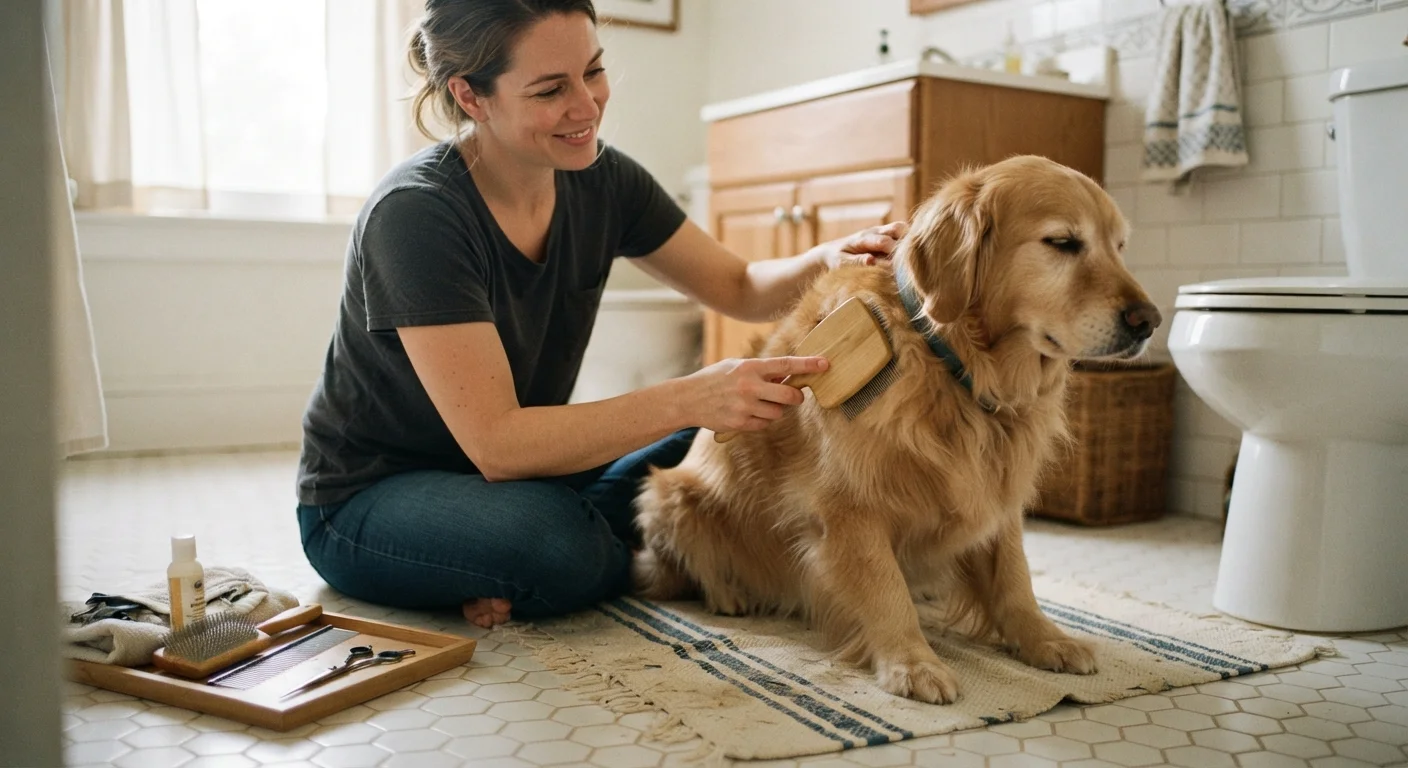
Brushing and detangling is the grooming task most owners can manage without formal training. Regular brushing prevents matting, reduces shedding, and gives you a chance to check the skin for lumps, irritation, or parasites. The right brush depends on coat type: a slicker brush works for most medium to long-haired dogs, while a rubber grooming mitt suits short-coated animals and cats that resist being brushed.
Bathing at home is practical for most dogs and some cats, provided you use a pet-specific shampoo formulated for their skin pH. Human shampoos, including baby shampoo, can strip the coat's natural oils over time. Rinse thoroughly, as residue can cause skin irritation, and dry the animal fully to prevent fungal issues in skin folds.
Surface ear cleaning with a veterinarian-recommended cleanser and a cotton ball is appropriate for routine maintenance on dogs with upright ears. The limit here matters: insert nothing into the ear canal. Visible debris on the outer ear flap is fair game; anything deeper is not.
Nail trimming sits in a middle category. It is achievable at home, but the risk of cutting the quick, the blood vessel inside the nail, is real and causes pain and bleeding. On light-colored nails, the quick is visible as a pink line. On dark nails, it is not. Many owners find grinding with a rotary tool safer than clipping for this reason. If your pet is reactive during nail handling, a groomer or vet tech can do a single nail trim visit for a modest fee.
Procedures that carry genuine risk without training
Anal gland expression is one of the most commonly mishandled DIY grooming tasks. Dogs with full anal glands may scoot or lick excessively, which leads some owners to attempt expression at home. Done incorrectly, it can cause rupture, infection, or impaction. A veterinarian or trained groomer should handle this, and if your dog needs it frequently, ask your vet whether dietary fiber changes might reduce the frequency. See how routine vet care prevents larger expenses for context on where professional visits pay off.
Deep ear cleaning for dogs prone to ear infections requires flushing the canal, and doing this without knowing the eardrum's condition can push debris further in or rupture the membrane. A vet should assess the ear first and demonstrate the correct technique if home maintenance is appropriate for your dog's situation.
Clipping around the face, ears, and paws with electric clippers requires the animal to hold still and the operator to understand where skin is loose or thin. Nicks in these areas can be serious, and a suddenly startled dog can make a clean cut go wrong in a second. If you are learning to clip, start on the body, not the face.
Mistakes can result in injury or infection
Cutting the quick during nail trimming, nicking skin with clippers, or incorrectly expressing anal glands can cause pain, bleeding, or infection that requires veterinary treatment and erases any cost savings.
Some procedures genuinely require trained hands
Deep ear cleaning, anal gland expression, and close facial clipping involve anatomy and technique that are difficult to learn from online videos alone, and errors have direct health consequences for the animal.
Tool costs and learning curve front-load the savings
The initial purchase of quality grooming tools and the time spent learning proper technique mean the financial benefit is not immediate, particularly for owners who only have one or two pets.
Anxious or reactive animals raise the risk level
A pet that moves suddenly during clipping or nail trimming dramatically increases the chance of an accidental injury, and owners may not have the handling skills to manage this safely without help.
Building a practical home grooming routine
The most cost-effective approach is a split routine: handle brushing, bathing, and ear maintenance at home on a schedule, and budget for professional appointments for nail grinding, full trims, or anything involving the anal glands. This reduces visit frequency from every four weeks to every eight or twelve weeks for many breeds.
Starter grooming tools (brush, nail grinder, shampoo, cotton balls, and ear cleanser) typically cost between $30 and $60 total, and most last years with basic care. The upfront investment pays for itself within one or two skipped grooming appointments.
When your pet resists grooming
Resistance during grooming is common and often stems from past discomfort rather than general temperament. Short, positive handling sessions on a regular basis, where no actual grooming happens, can reduce that resistance over several weeks. If your pet's anxiety is severe or involves biting, a veterinarian can advise on whether behavioral support or mild sedation during professional grooming appointments is appropriate.
If your pet is anxious during grooming, brief daily handling sessions, touching paws, ears, and the face without doing anything, build tolerance over time. An animal that accepts handling calmly is safer to groom and less likely to cause an accidental injury through sudden movement.
For owners who want professional help without full-service grooming prices, low-cost vet and wellness resources include veterinary school clinics that sometimes offer grooming services at reduced rates.