

Key Takeaways
Option A
Name-brand pet medications
The original, patent-protected formulation.
Best for: Situations where a specific proprietary delivery system or inactive ingredient profile matters clinically.
Option B
Generic pet medications
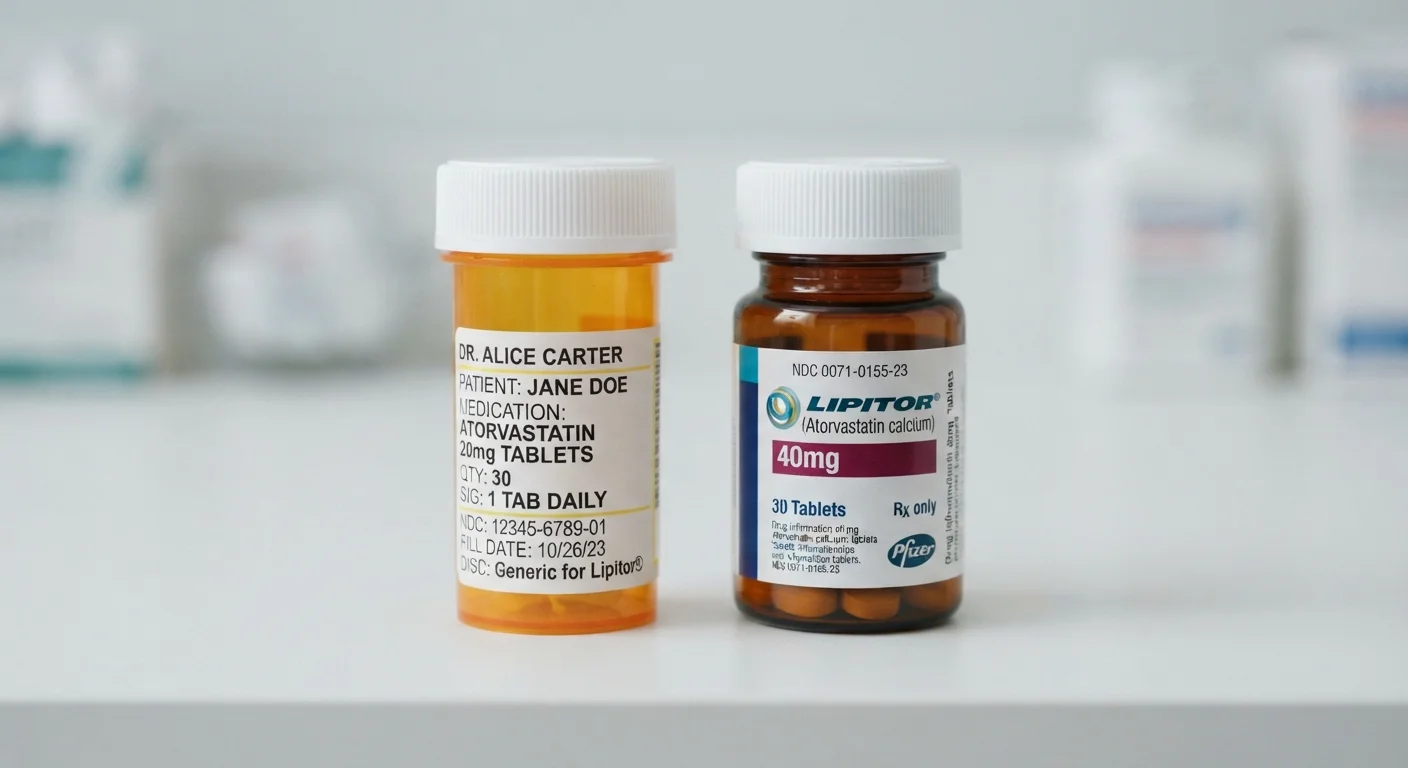
The bioequivalent, lower-cost alternative.
Best for: Budget-conscious pet owners managing routine or long-term prescriptions with stable, well-studied active ingredients.
If your pet is on a long-term daily medication
Generic pet medications
The savings compound quickly over months and years. A generic with the same active ingredient delivers the same therapeutic effect at a fraction of the cost.
If your pet has a known ingredient sensitivity or allergy
Name-brand pet medications
Inactive ingredients like fillers, dyes, and binders vary between formulations. Your vet can review which version avoids the specific trigger.
If your vet prescribes a narrow-therapeutic-index drug
Name-brand pet medications
Drugs where small concentration differences affect outcomes require extra caution. Your veterinarian's guidance on formulation consistency matters here.
If you are managing routine parasite prevention costs
Generic pet medications
Many flea, tick, and heartworm generics have been on the market long enough to have strong safety records and are significantly cheaper per dose.
How generic approval actually works for pet drugs
When a pharmaceutical company develops a new veterinary drug, it receives patent protection for a set period. During that window, no competitor can sell the same compound. Once the patent expires, other manufacturers can apply to produce a generic version.
For drugs approved through the FDA's Center for Veterinary Medicine, a generic applicant must demonstrate bioequivalence: the generic delivers the same active ingredient at the same concentration, is absorbed at a comparable rate, and reaches the same level in the bloodstream. The generic does not need to repeat the full safety and efficacy trials the original drug went through, because those findings already exist. What it must prove is that its version performs the same way in the body.
Not every veterinary drug falls under FDA oversight. Some parasite preventives, for example, are regulated as pesticides through the EPA. The regulatory pathway differs, but the underlying principle, that a generic must match the performance of the reference product, remains consistent.
| Criterion | Name-brand | Generic |
|---|---|---|
| Active ingredient | Original formulation | Identical by regulation |
| Bioequivalence required | Reference product | Must match reference |
| Inactive ingredients | Proprietary formula | May differ |
| Typical cost | Higher (patent period) | 30-80% less on average |
| Availability | Always available | Only after patent expires |
| Regulatory oversight | FDA/USDA/EPA | Same agencies |
| Delivery format | Consistent across fills | May vary by manufacturer |
Where the real differences appear
Active ingredients in generics are chemically identical to those in name-brand versions by regulatory requirement. The differences that do exist involve inactive ingredients: the binders, fillers, colorants, flavorings, and coatings that make a tablet hold together or make a chewable palatability acceptable to a dog or cat.
For most pets, these differences are irrelevant. For a pet with a documented food dye sensitivity, a specific protein allergy, or a condition affecting absorption, they can matter. If your pet has had unexplained reactions to a medication, ask your veterinarian to compare the inactive ingredient lists of the brand and generic versions.
Delivery format is another variable. A brand-name drug may come as a scored tablet, while a generic of the same compound comes as a capsule. Neither is inherently worse, but if your pet reliably refuses one format, that is a practical consideration worth raising with your vet before filling the prescription.
For budget planning across all your pet's healthcare costs, see how pet insurance compares to a dedicated savings fund for context on managing larger expenses.
The cost gap and when it matters
The price difference between a generic and its brand-name equivalent can be substantial. For a pet taking a daily medication long-term, such as a thyroid drug, a seizure medication, or a heart drug, the annual savings from choosing a generic can reach hundreds of dollars without any change in the active compound the pet receives.
Some drugs have no approved generic at all. In those cases, cost comparison is not an option, and the conversation with your vet shifts to whether any therapeutically similar alternative exists. A compounding pharmacy is sometimes raised as a cost option, though compounded medications are not FDA-approved generics and carry different quality-control considerations. Ask your veterinarian to explain the trade-offs before going that route.
30-80%
Typical cost reduction with generics
The FDA notes that generic drugs generally cost significantly less than brand-name equivalents once market competition develops after patent expiry.
~80%
Share of human prescriptions filled as generics
According to the FDA, generics account for roughly 8 in 10 prescriptions dispensed in the U.S., reflecting broad regulatory acceptance of bioequivalence standards.
If prescription drug costs are a recurring concern, low-cost veterinary and wellness resources can help identify programs that reduce overall care expenses, not just medications. And routine preventive care can reduce how often prescriptions are needed in the first place.