

Auto

Car Maintenance Tasks Families Should Know Before a Long Drive

Share
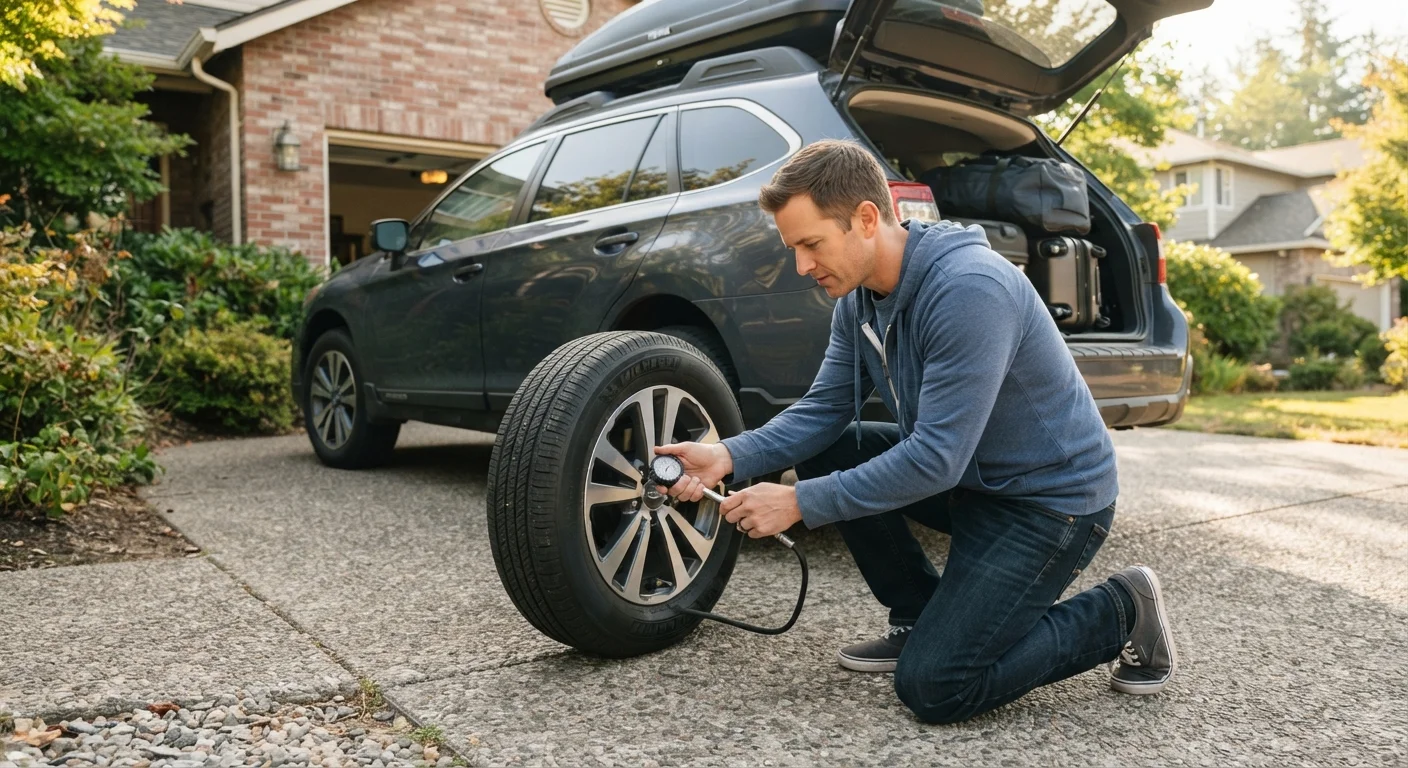
Parent checking tire pressure on a family SUV in a driveway before a road trip

Key Takeaways

Checking tire pressure and tread before departure can reduce blowout risk and improve fuel economy.
Fluid levels including oil, coolant, and brake fluid should be verified at least a week before a long trip.
Brakes, belts, and lights are quick to inspect but often skipped, and failures are costly mid-trip.
A qualified mechanic should handle any repair you are not confident completing safely yourself.
Catching small issues before departure is almost always cheaper than fixing them on the road.
45–90 min

Summary

22 items · 45 to 90 minutes

Why a pre-trip inspection matters for families

A breakdown on an interstate with kids in the back seat is stressful and expensive. Towing fees, hotel stays, and emergency repairs can easily cost several hundred dollars, none of which you planned for. Most of those situations trace back to something that was visible days before the trip.

This checklist is designed for families who want to catch problems early, without needing a mechanical background. For any item where you are unsure about what you are looking at or how to fix it, take the vehicle to a qualified mechanic before departure. That advice applies throughout: when in doubt, get a professional opinion.

Before you load the car, see our guide to packing a family vehicle safely, since weight distribution affects handling and tire wear. And once you have completed these checks, it is worth reading up on roadside emergency preparedness so you know what to do if something still goes wrong.

Tires

Check tire pressure on all four tires and the spare using a gauge, and inflate to the level listed on the driver-side door jamb sticker (not the number on the tire sidewall). Must
Inspect tread depth on each tire using the quarter test: insert a quarter upside down into a tread groove, and if you can see above Washington's head, the tread is low enough to replace. Must
Look for visible damage including cuts, bulges, or cracking on the tire sidewalls. Must
Confirm the spare tire is inflated and that the jack and lug wrench are accessible in the vehicle. Should

Fluids

Check engine oil level with the dipstick when the engine is cold, and top off or schedule an oil change if you are within 1,000 miles of your interval. Must
Check coolant level in the overflow reservoir and inspect for any discoloration or oily residue that could indicate a problem. Must
Verify brake fluid is at the correct level in the reservoir under the hood; a significantly low level can indicate brake wear or a leak. Must
Check windshield washer fluid and fill completely, especially if you are driving through areas with insects, dust, or highway construction. Should
Inspect power steering fluid if your vehicle has a hydraulic system (many newer vehicles use electric steering and have no reservoir). Nice to have

Brakes and suspension

Listen for squealing, grinding, or pulsing when braking during a slow test drive in your neighborhood, and have a mechanic inspect the brakes if you notice any of these. Must
Check whether the vehicle pulls to one side when braking, which can indicate uneven pad wear or a stuck caliper. Should
Drive slowly over a bump or rough patch and listen for unusual clunks or squeaks from the suspension; persistent noise warrants a professional inspection. Should

Lights and visibility

Test all exterior lights including headlights, taillights, brake lights, turn signals, and reverse lights; have a second person help if needed. Must
Check that windshield wiper blades clear the glass cleanly without streaking; replace any blades that smear or skip. Must
Clean the windshield inside and out, including the rear window, to eliminate glare and improve visibility at night. Should

Under the hood

Check the condition of the drive belts for visible cracking, fraying, or glazing, and have a mechanic replace any belt that looks worn. Should
Inspect battery terminals for corrosion (white or blue powder buildup) and confirm the battery connections are tight. Should
Note the date of your last air filter replacement; a clogged filter reduces engine efficiency and is inexpensive to swap. Nice to have

Dashboard and safety systems

Start the car and confirm no warning lights remain on after the initial startup sequence; if the check engine, oil pressure, or battery light stays on, have it diagnosed before departing. Must
Confirm all seat belts latch, retract, and release properly for every seating position your family will use. Must
Verify that car seats and booster seats are installed according to the manufacturer's instructions and have not exceeded their expiration date. Must

Tools and supplies you will need

Most of these checks require only basic tools you may already own. A few inexpensive items make the process faster and more accurate.

Required

Tire pressure gauge

Measures tire pressure accurately so you can inflate to the correct PSI for your vehicle.

Required

Flashlight or headlamp

Helps you see clearly when inspecting under the hood, tire sidewalls, and the underside of the vehicle.

Required

Owner's manual

Contains the correct fluid specifications, tire pressure ratings, and service intervals for your specific vehicle.

Optional

Funnel and fluid top-off containers

Makes adding coolant, washer fluid, or oil less messy and more precise.

Optional

Tread depth gauge

Gives a more precise measurement of tire tread depth than the coin test alone.

What to prioritize and when to call a mechanic

Complete the "must" items at minimum one to two days before departure, not the morning you leave. That window gives you time to book a repair appointment if something needs attention. Items marked "should" are strongly worth doing, especially for trips longer than 300 miles. "Nice to have" items add comfort and convenience but are not safety-critical.

Some tasks require a licensed mechanic

Brake inspection beyond a basic listen test, belt replacement, and diagnosing warning lights all involve safety systems that require proper training and tools. Do not attempt repairs you are not qualified to perform. A pre-trip inspection at a reputable shop typically costs less than a single roadside service call.

Tire condition deserves particular attention because it affects more than safety. Tire condition affects fuel use, ride comfort, and handling in ways that accumulate over a long drive. Underinflated tires reduce fuel economy and generate excess heat. Worn tires lose grip, especially in rain.

If your trip involves significant budgeting, keep in mind that preventive maintenance before a trip is one of the more controllable costs. For a broader look at what road trips actually cost families, see road trip budgeting for families.

Do not delay repairs until after your trip

A brake issue, a warning light, or a visibly damaged tire should be resolved before departure, not monitored during the drive. Conditions often get worse under highway speeds and sustained load. If a repair cannot be completed in time, consider rescheduling the trip rather than driving with a known problem.

Auto Editorial Team is the collective byline for our editorial team and contributor network. Articles published under this byline or an editorial pen name are researched, written, and reviewed according to our editorial standards for clarity, consistency, and independence before publication.

View all articles by Auto Editorial Team →
Disclaimer: The content provided on our blog site traverses numerous categories, offering readers valuable and practical information. Readers can use the editorial team’s research and data to gain more insights into their topics of interest. However, they are requested not to treat the articles as conclusive. The website team cannot be held responsible for differences in data or inaccuracies found across other platforms. Please also note that the site might also miss out on various schemes and offers available that the readers may find more beneficial than the ones we cover.