

Key Takeaways
Why roadside emergencies catch families off guard
Most families prepare for the fun parts of a road trip: the playlists, the snacks, the stops. The vehicle itself often gets a quick glance and nothing more. That gap matters because roadside breakdowns happen on a predictable schedule. Tires fail, batteries die, and fuel runs out regardless of how new the car is or how careful the driver.
The financial hit is real, too. A single tow truck call without roadside coverage can run $100 to $300 or more depending on distance and location. Combine that with a motel stay while repairs happen, and an unplanned stop can easily cost a family $500 or more. Preparation shrinks that number significantly. Before you leave home, the pre-trip maintenance checklist covers the vehicle checks that prevent many of these situations in the first place.
What to keep in your emergency kit
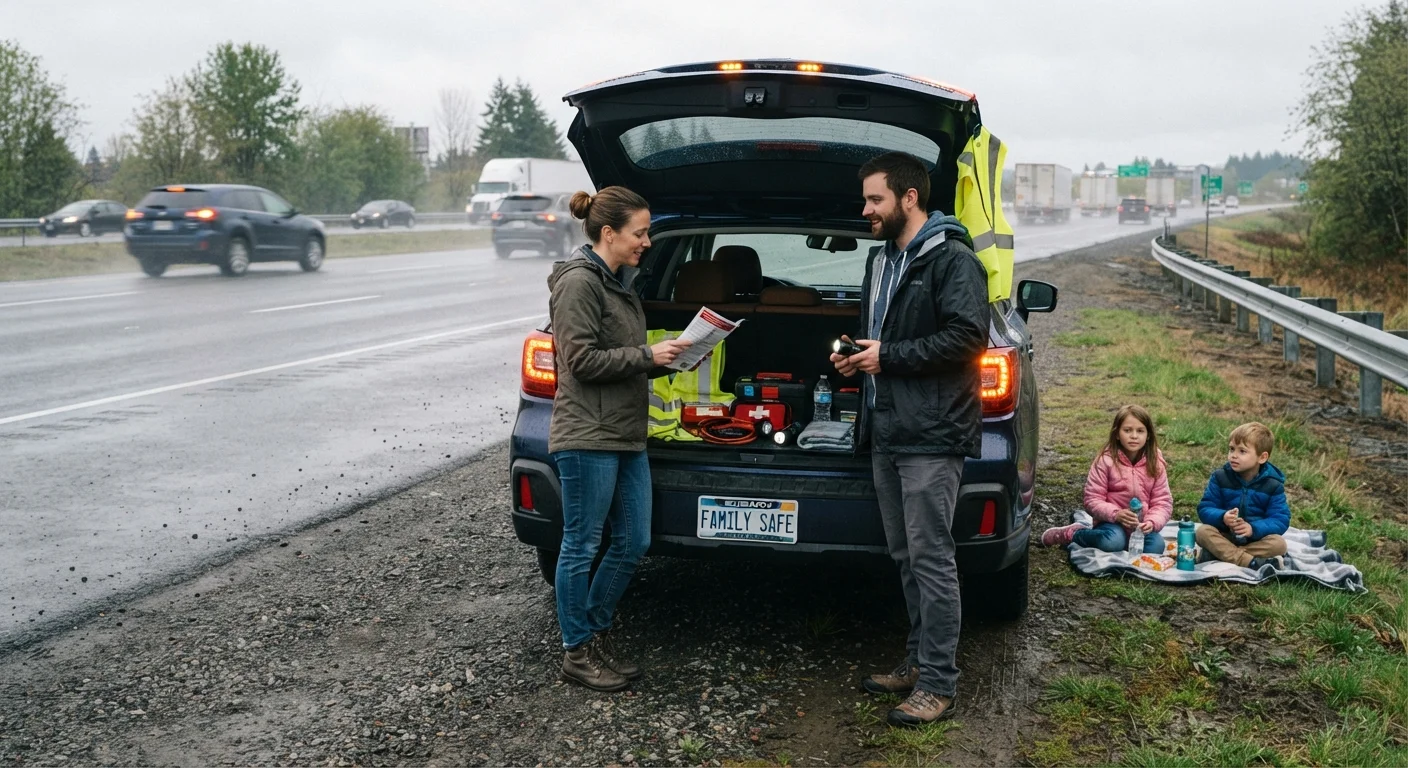
A good roadside kit does not require buying an expensive pre-assembled box. Most families can build one from items that cost $50 to $80 total and fit in a medium-sized storage bin in the trunk.
Carry a charged portable jump starter rather than relying on another driver to stop
Jump-starting from a bystander's vehicle requires someone to stop, which is not guaranteed on rural roads. A portable lithium jump starter works on most passenger vehicles and eliminates the wait. It also charges phones and small devices, which matters when you need to call for help.
Pack a basic first aid kit and know where it is
Minor injuries happen during roadside stops: scraped hands while changing a tire, a child who trips on gravel. A stocked first aid kit with bandages, antiseptic wipes, and pain reliever handles those moments without a pharmacy run. Confirm contents before each long trip.
Keep a gallon of water in the vehicle at all times
Water serves multiple purposes during a breakdown: drinking during a long wait in heat, rinsing hands after handling a dirty spare, and cooling an overheated engine (with caution and only when the engine has cooled). One gallon takes minimal space and costs very little.
Include a phone charger and a backup power bank in the kit
A dead phone at a breakdown is a serious problem. A power bank that is kept charged before the trip ensures you can call for help, use navigation, and contact family regardless of how long you have been driving. Charge it the night before departure.
Store a paper map of your route alongside your digital navigation
Cell service fails in rural areas, national parks, and mountain corridors. A paper map lets you identify the nearest town, highway exit, or service road without signal. It also helps you communicate your location clearly to emergency services.
Keep the kit organized so anyone in the vehicle can find items quickly, even in the dark or in the rain. A waterproof bag or lidded bin beats a loose pile every time. If your trunk space is already tight, the car packing guide has practical ideas for fitting emergency gear without sacrificing comfort.
How to respond in the first two minutes
The first two minutes after a problem appears set the tone for everything that follows. Panic leads to poor decisions; a simple mental script helps.
Signal early. If you feel a tire lose pressure or hear an unusual noise, activate your turn signal immediately and begin moving toward the shoulder gradually. Do not brake hard. Steer to the right shoulder whenever possible, and aim for a flat, straight section of road rather than a curve or a dip.
Once stopped, turn on hazard lights right away. Get the vehicle as far off the travel lane as you can. If you are on a highway and cannot safely exit the car, stay inside with seatbelts on and call for help from inside the vehicle.
With children in the car, assign one adult the job of managing them before anything else happens outside the vehicle. Kids should exit on the passenger side away from traffic and move well clear of the road. A family that has talked through this sequence at home will move through it calmly when it counts.
Roadside assistance: what it covers and what it costs
Roadside assistance is one of the more straightforward ways for families to manage breakdown costs. Coverage typically includes towing up to a set distance, battery jump-starts, flat tire changes, lockout service, and fuel delivery. The specific limits vary by plan.
Several paths exist for getting this coverage. Some auto insurance policies include a roadside assistance add-on for a small annual premium. Certain credit cards offer roadside benefits as a cardholder perk, though coverage limits are often lower. Auto club memberships provide standalone plans with tiered options.
Whatever source you use, read the terms before you travel. Know the towing distance limit, whether the benefit covers all vehicles in your household, and how to contact the service from out of state. Store the claims number somewhere other than your phone in case the battery dies. A printed card in the glove box costs nothing.
For a broader look at where road trip costs tend to surprise families, the road trip budgeting guide breaks down real spending patterns including emergency-related expenses.
Tire problems: the most common family breakdown
Flat tires account for a large share of roadside stops. Knowing a few basics about your vehicle's tires can shorten the time you spend on the shoulder significantly.
First, confirm before your trip that your spare tire is inflated to the correct pressure. Many vehicles sit for months with a spare that is flat or nearly flat. Confirm also that your jack and lug wrench are present and functional. A missing lug wrench discovered on the shoulder of an interstate is a difficult problem to solve.
If your vehicle has a compact spare (sometimes called a donut), it is designed for short-distance, low-speed use only. The standard guidance from vehicle manufacturers is to stay under 50 mph and drive fewer than 70 miles before switching to a full-size replacement. Check your owner's manual for the exact limit on your vehicle. The tire condition guide explains how worn or underinflated tires raise the likelihood of a blowout before you even leave home.
Staying safe while you wait for help
Once you have called for help, the main job is staying visible and staying out of the path of traffic. Place reflective triangles or road flares at least 100 feet behind the vehicle to alert approaching drivers. Do not rely on hazard lights alone, particularly at night or in poor weather.
Keep everyone together and away from the vehicle on the side farthest from traffic. Do not stand between your car and oncoming lanes. If the shoulder is narrow or you feel unsafe near the road, get behind a guardrail if one is present.
While waiting, keep children occupied with something from your regular supplies rather than letting them wander. A tablet, a book, or a simple car game is enough. Stay on the line with the dispatch service if they ask you to, and watch for the service vehicle's arrival so you can signal it clearly.
A full pre-departure review, including emergency planning, fits naturally into the family travel prep checklist that covers everything from documents to vehicle readiness before any trip.